
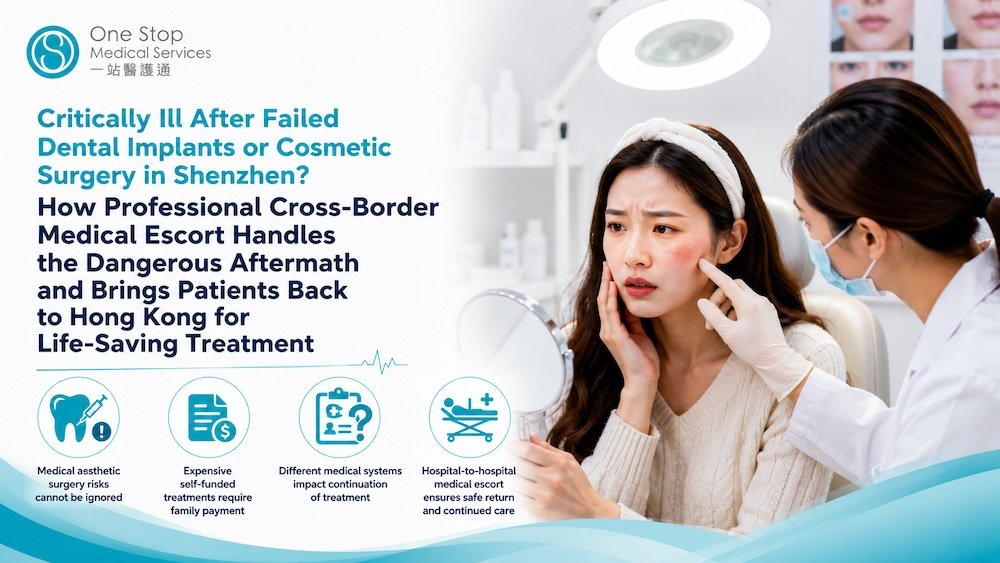
Travelling north to Shenzhen for cosmetic surgery, dental implants, botulinum toxin injections (Botox), or high-risk medical aesthetic procedures has become increasingly popular among Hong Kong residents. However, cross-border medical aesthetic incidents have also recorded a significant increase. Some small clinics or illegal medical aesthetic centres in Mainland China carry out invasive procedures in pursuit of excessive profits despite lacking sterile equipment, using drugs of unknown origin, or involving practitioners without registered medical licences. These practices can easily cause sepsis, acute local tissue necrosis, or even respiratory and cardiac arrest resulting from an allergic reaction to anaesthetic drugs. When a journey intended to help someone “look better” turns into a life-threatening emergency, dealing with the extremely difficult aftermath and evacuating the patient back to Hong Kong for life-saving treatment becomes the family’s only race against time.
Two Deadly Chain Reactions Following a Failed Medical Aesthetic Procedure in Mainland China
When a Hong Kong resident suffers complications from a failed medical aesthetic procedure in Mainland China and their condition becomes critical, they are often rushed to a local Mainland hospital for emergency treatment. At that moment, the family may suddenly face two serious difficulties within the Mainland medical system:
“Payment Before Treatment” and Extremely Expensive Special Self-Funded Medication
Mainland hospitals operate a strict advance-deposit system. A deposit of tens of thousands of renminbi may be required before the patient can undergo a CT scan or enter the ICU. More critically, when treating sepsis or organ failure caused by an infection following a medical aesthetic procedure, many of the required advanced antibiotics, specialist detoxification medication, and haemodialysis equipment are classified as self-funded items outside the medical insurance reimbursement list. These substantial costs must be paid in full by the family at the hospital. The Hong Kong Hospital Authority and Hong Kong public hospitals do not provide reimbursement or subsidies for medical expenses incurred outside Hong Kong.
An Information Gap When Hong Kong Public Hospitals “Do Not Take Over Mainland Medical Records”
When anxious family members contact the Hong Kong Hospital Authority or a public hospital accident and emergency department and ask them to receive the patient, they may discover a major communication barrier between the two medical systems. Hong Kong public hospitals do not recognise and cannot directly access CT images or diagnostic documents from Mainland hospitals. Without professional medical coordination, even if the family transports the patient to a Hong Kong boundary crossing themselves, the accident and emergency medical team in Hong Kong may not know which drugs were used during the Mainland procedure or the type of infectious organism involved. This prevents them from immediately beginning precise continuation treatment and may delay the critical treatment window.
Why Can Ordinary Cross-Border Transport Become a Hidden Danger for Critically Ill Patients?
When a loved one is critically ill, families may make a dangerous decision in a state of panic by attempting to hire an ordinary dual-plate private car, a cross-border seven-seater, or even push the patient through the boundary crossing in a wheelchair.
For a critically ill patient who has recently suffered a failed procedure and may be experiencing severe bleeding, serious infection, or anaesthetic complications requiring continuous life-support equipment, ordinary civilian transport presents extremely high risks:
- Being required to leave the vehicle at the boundary crossing: When travelling in a non-medical vehicle, the patient may be required to leave the vehicle or undergo inspection inside the vehicle. Repeated movement and jolting can easily cause heavy wound bleeding or dislodge life-support tubes.
- No medical emergency capability: Civilian vehicles do not carry oxygen, patient monitors, or emergency medication. If the patient’s condition suddenly deteriorates on the Guangzhou–Shenzhen Expressway, an untrained driver or family member may be unable to provide any effective assistance.
Activate a Professional “Hospital-to-Hospital” Cross-Border Medical Escort to Reach a Hong Kong Operating Theatre
To overcome the administrative and medical barriers between the two jurisdictions, the only route described for the patient is a seamless point-to-point escort service that meets the highest safety standards, transferring the patient directly from Hospital A to Hospital B.
This mission must be carried out by a professional cross-border medical transfer vehicle that holds the required legal licences in both Guangdong and Hong Kong and is equipped with ICU-level life-support equipment, including an advanced ventilator, onboard oxygen, and emergency monitoring systems. Throughout the transfer, a Hong Kong-registered doctor or nurse continuously monitors the patient’s vital signs without interrupting life support. The team also coordinates in advance with the attending doctor in Mainland China and the accident and emergency department of the receiving hospital in Hong Kong to complete a one-to-one clinical handover of the patient’s medical records and terminology. Only by avoiding a vehicle transfer at the boundary crossing and handling the complicated hospital admission, discharge, and immigration procedures can the family member be transported rapidly and safely to a Hong Kong hospital for continued treatment.
One Stop Medical Services provides professional bed-to-bed medical escort services, helping patients and their families navigate complex transportation and administrative arrangements with ease. Our experienced medical team ensures that patients receive appropriate medical supervision, care and support throughout their journey.
For a free consultation, please call or WhatsApp us at+852 9788 9115.