China-Hong Kong Medical Transport

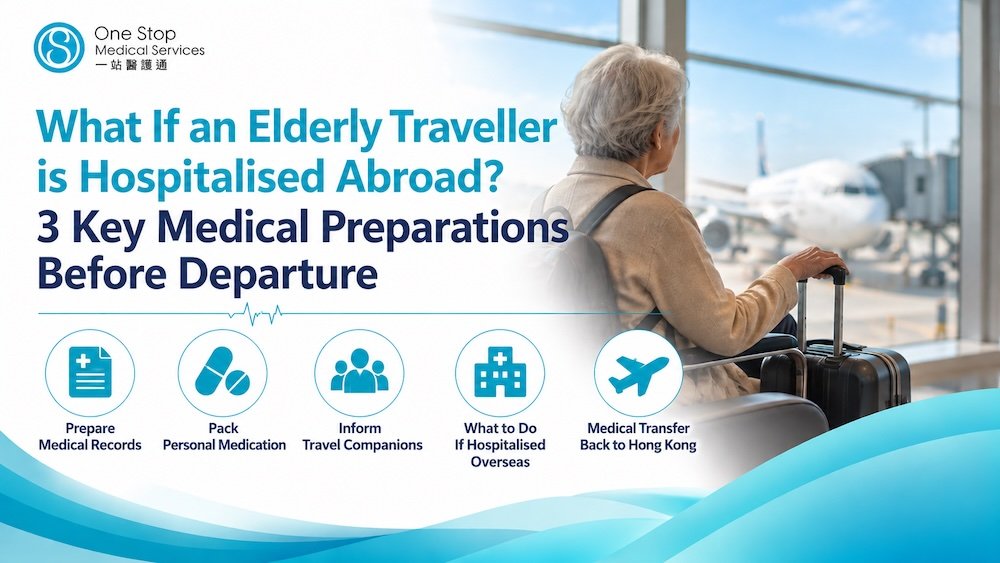
Elderly Traveller Hospitalised Abroad? Three Medical Preparations to Make Before Departure

Older travellers and people managing chronic conditions need more than tickets and insurance. Three practical preparations—medical records, medicines and allergy information—can support care if an emergency occurs overseas.
Elderly Traveller Hospitalised Abroad? Three Medical Preparations to Make Before Departure Read More »

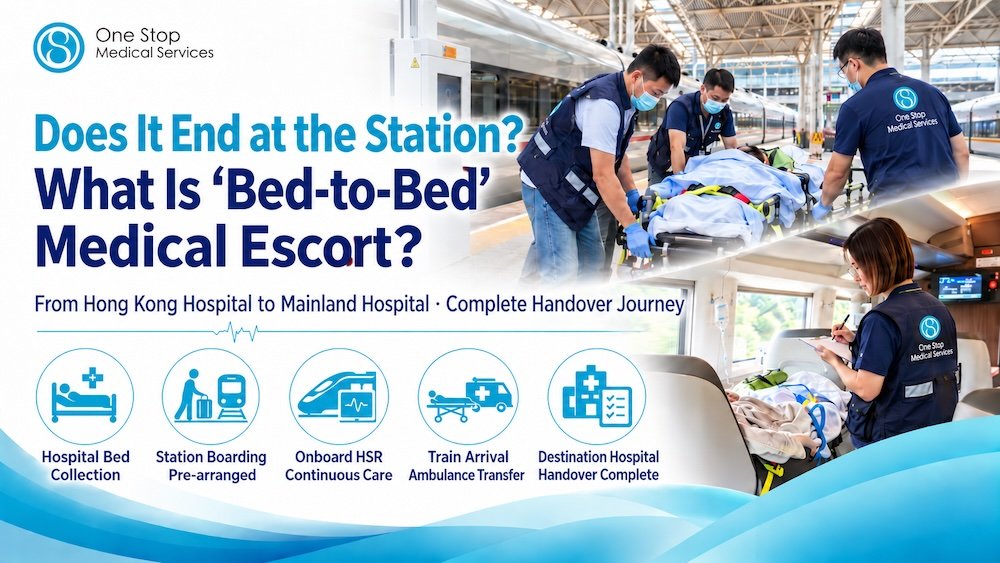
Does Medical Escort End at the Railway Station? What “Bed-to-Bed” Transfer Really Means from a Hong Kong Hospital to a Mainland China Hospital

A bed-to-bed medical escort does not end at the railway station. It coordinates hospital collection, station and rail transfer, in-transit care, disembarkation, ambulance connection and final handover at the receiving hospital.

Does Medical Escort End at the Railway Station? What “Bed-to-Bed” Transfer Really Means from a Hong Kong Hospital to a Mainland China Hospital Read More »

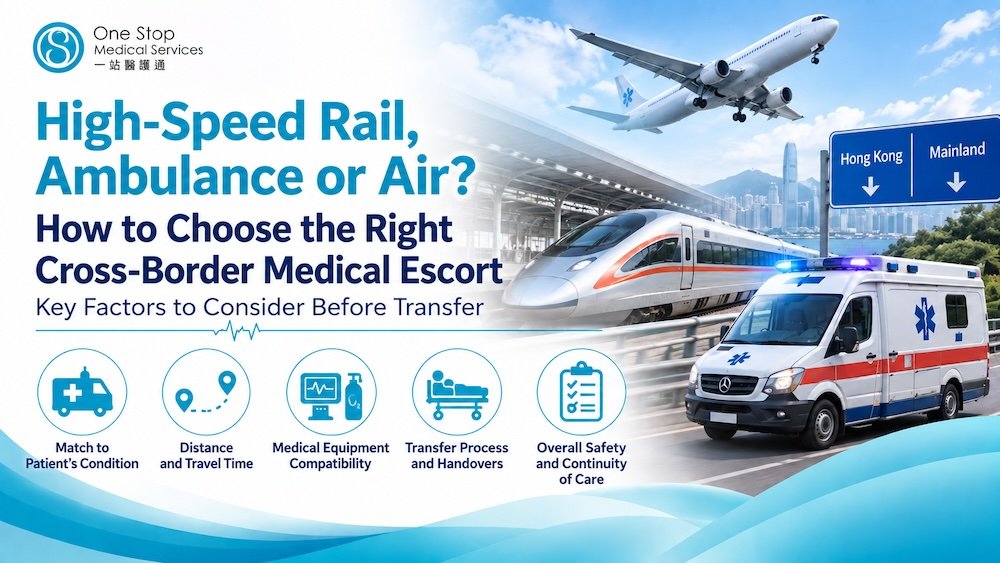
High-Speed Rail, Ambulance or Air? How to Choose a Cross-Border Medical Escort Option

High-speed rail, ambulance or air transport? Choosing a cross-border medical escort option involves more than comparing travel time. Patient stability, oxygen needs, medical equipment, positioning, transfer points and distance all matter. This article explains how the three transport options differ from a bed-to-bed medical transfer perspective.

High-Speed Rail, Ambulance or Air? How to Choose a Cross-Border Medical Escort Option Read More »

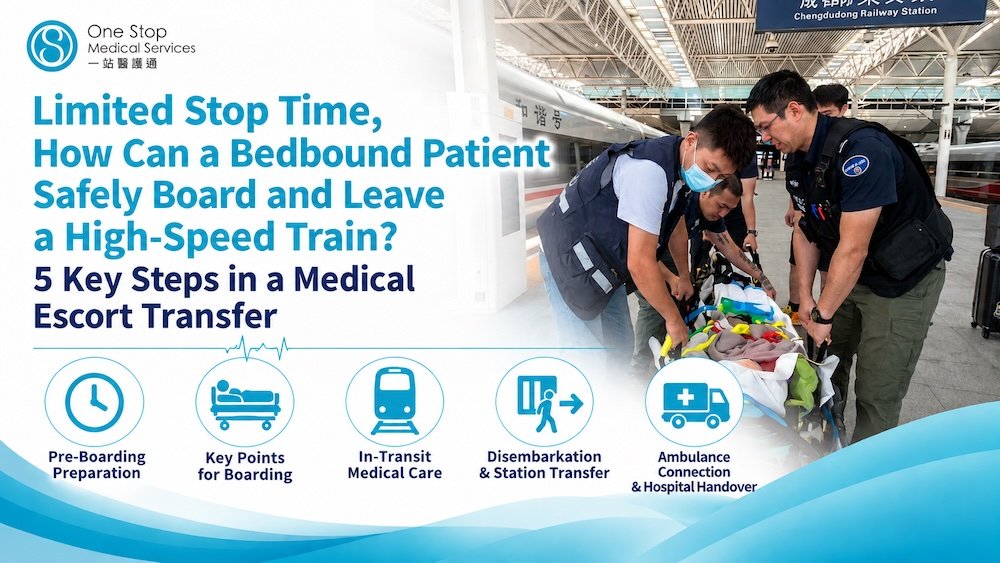
Limited Station Time: How Can a Bedbound Patient Safely Board and Leave a High-Speed Train?

Boarding and leaving a high-speed train can be one of the most challenging parts of a medical transfer for a bedbound patient. This real-world case explains how advance preparation, staff coordination, equipment management and bed-to-bed handover help maintain a safe and orderly journey.

Limited Station Time: How Can a Bedbound Patient Safely Board and Leave a High-Speed Train? Read More »

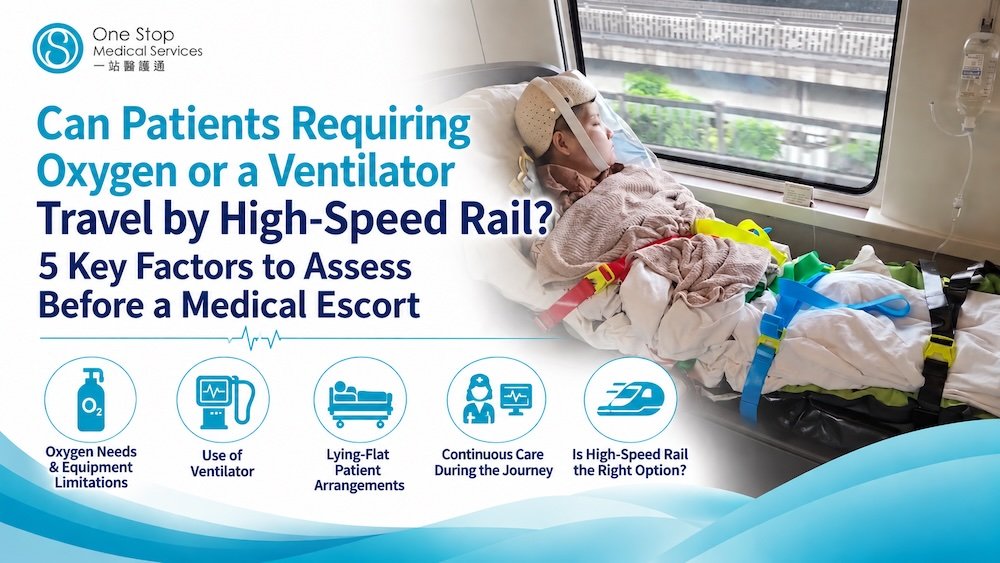
Can Patients Requiring Oxygen or a Ventilator Travel by High-Speed Rail? 5 Key Factors Before a Medical Escort

Can a patient requiring oxygen, ventilatory support or a lying-flat position travel by high-speed rail? Learn the five key factors medical teams assess, including patient stability, oxygen needs, equipment capability, in-transit care and transfer logistics.

Can Patients Requiring Oxygen or a Ventilator Travel by High-Speed Rail? 5 Key Factors Before a Medical Escort Read More »

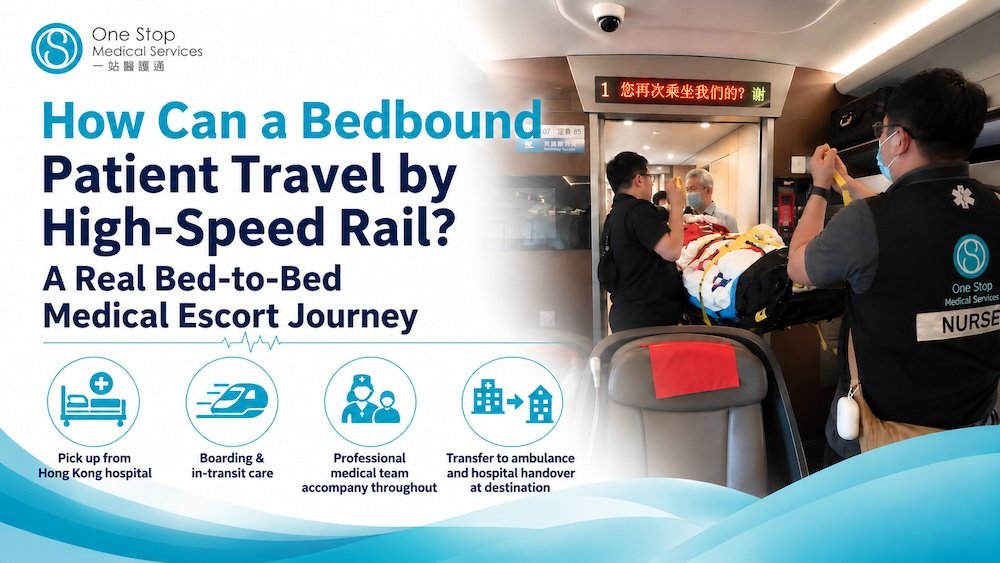
A Train Stops for Only Minutes — How Can a Bedbound Patient Be Safely Transferred? A Bed-to-Bed Medical Escort Journey from Hong Kong to Mainland China

How can a bedbound patient safely travel by high-speed rail when station stops last only minutes? Follow a real bed-to-bed medical escort journey from a Hong Kong hospital to Mainland China, including boarding, in-transit care, disembarkation, ambulance transfer and hospital handover.

A Train Stops for Only Minutes — How Can a Bedbound Patient Be Safely Transferred? A Bed-to-Bed Medical Escort Journey from Hong Kong to Mainland China Read More »

Discharged from a Mainland Hospital — Does That Mean You Can Simply Travel Back to Hong Kong? 5 Things Families Should Consider When the Patient Still Needs Oxygen, a Feeding Tube or a Urinary Catheter

Hospital discharge in Mainland China does not automatically mean a patient is ready for family-arranged cross-border travel. If oxygen, feeding tubes, urinary catheters or additional assistance are still required, families should assess the full journey before deciding on ordinary transport or a medical escort.

Discharged from a Mainland Hospital — Does That Mean You Can Simply Travel Back to Hong Kong? 5 Things Families Should Consider When the Patient Still Needs Oxygen, a Feeding Tube or a Urinary Catheter Read More »

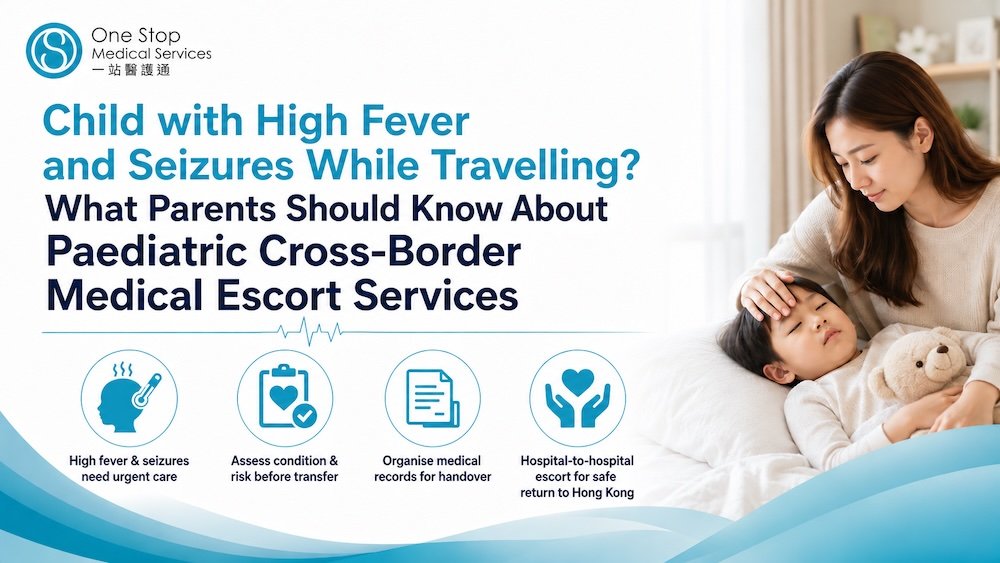
Child Develops a High Fever and Seizures While Travelling in Mainland China? What Families Should Know About Cross-Border Paediatric Medical Transfer

If a child develops a high fever, seizures or altered consciousness while travelling in Mainland China, immediate local medical assessment should come first. Learn how Mainland 120 services, transfer assessment and hospital-to-hospital medical escort can support a safer return to Hong Kong.

Child Develops a High Fever and Seizures While Travelling in Mainland China? What Families Should Know About Cross-Border Paediatric Medical Transfer Read More »

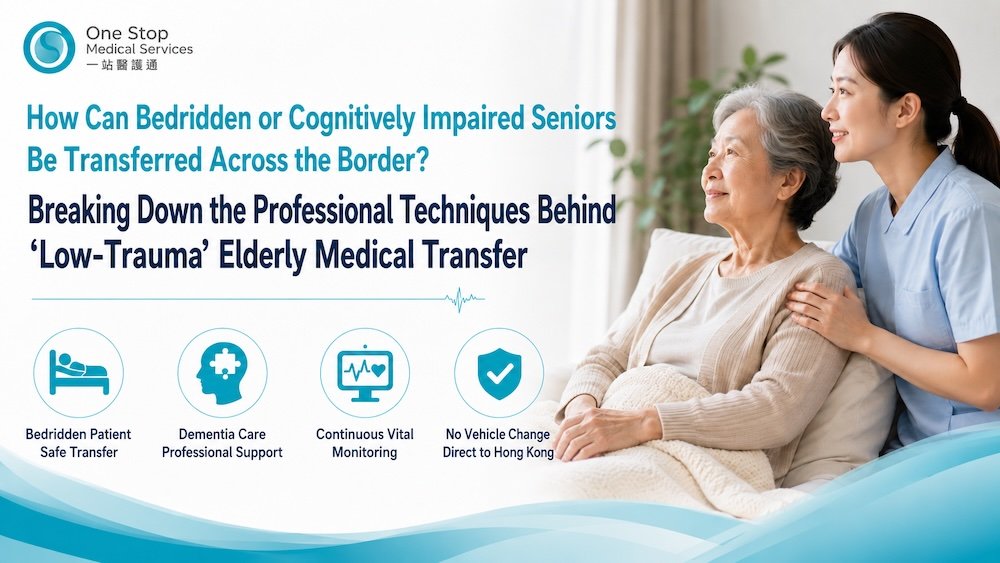
How Can Long-Term Bedridden Older Adults and Those with Cognitive Impairment Be Transferred Between Hospitals Across the Border? Breaking Down the Highly Technical Requirements of “Pain-Free Cross-Border Transfer” for Elderly Patients

When an elderly, cognitively impaired or long-term bedridden patient needs to return from Mainland China to Hong Kong for hospital transfer, ordinary cross-border transport may create risks including delirium, shear injuries and worsening pressure sores. This article explains how professional medical escort reduces disruption and secondary trauma.

How Can Long-Term Bedridden Older Adults and Those with Cognitive Impairment Be Transferred Between Hospitals Across the Border? Breaking Down the Highly Technical Requirements of “Pain-Free Cross-Border Transfer” for Elderly Patients Read More »

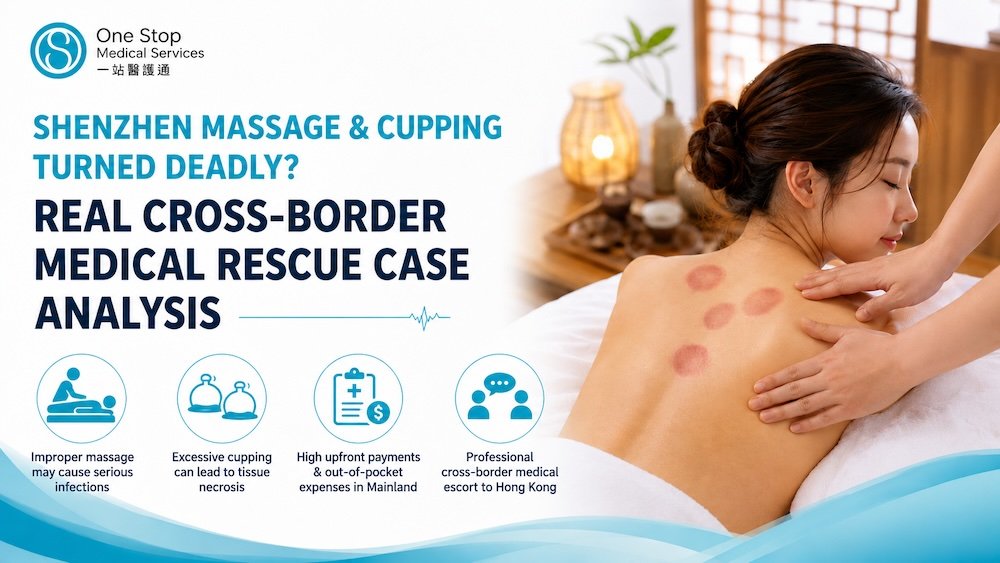
Can Massage or Cupping in Shenzhen Lead to Muscle Necrosis? A Real Medical Rescue Case Analysis of a Relaxing Trip North That Turned Life-Threatening

Massage, cupping and scraping in Shenzhen may appear to be harmless ways to relax, but improper techniques or inadequate disinfection can lead to serious infection, muscle necrosis and even sepsis. This article explains the treatment, payment, medical-record handover and cross-border transfer risks families may face.

Can Massage or Cupping in Shenzhen Lead to Muscle Necrosis? A Real Medical Rescue Case Analysis of a Relaxing Trip North That Turned Life-Threatening Read More »